Intelligence in humans, rodents and robots
See our recent publications here.
Why study the brain?
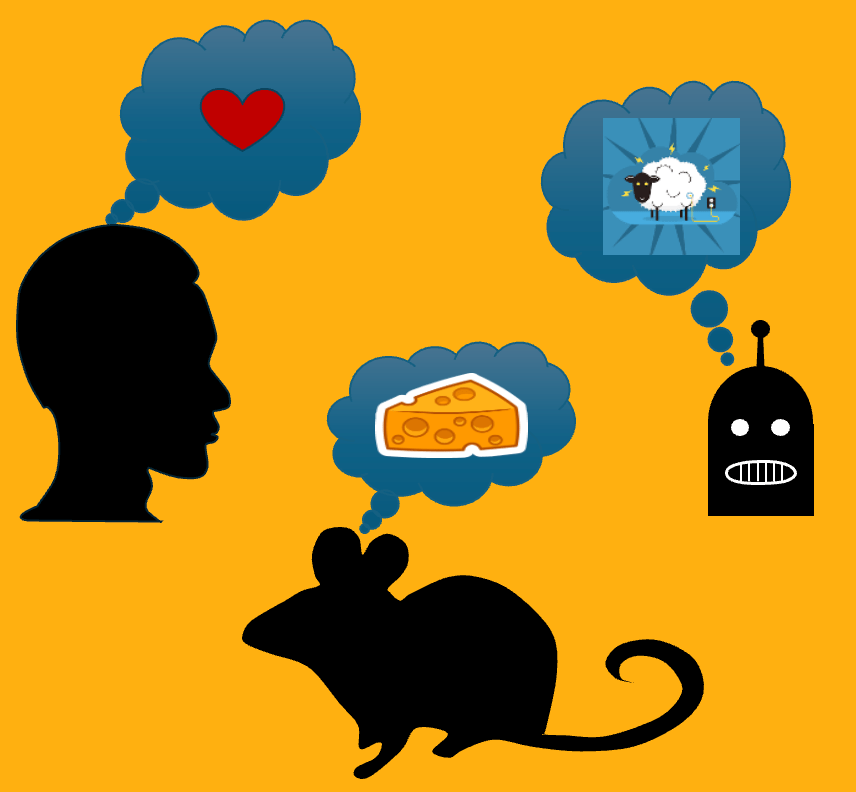
Although artificial deep neural networks are able to outperform humans on individual tasks like image detection or games like GO, the brain remains superior in several aspects. It uses far less power than AI systems, is able to master multiple tasks, works well in novel situations, and is able to control the body. Moreover, human intelligence is ’embodied’ and incorporates emotions. This supports sophisticated processing for observational learning, metaphorical reasoning, empathy, and morality.
Approach
We use experimental methods (ensemble neural recording; optogenetics, etc.) and computational approaches to identify the hidden forces that influence activity in neural networks. Our conceptualization is that of a ‘manifold’ that dictates the temporal evolution of patterned neural activity in the neocortex. This is shaped by connectivity within the cortex, inputs from sub-cortical structures such as the basal ganglia, and chemical inputs from neuromodulators and endocrines. This provides a conceptual framework to understand complex interactions from molecular to network levels.
Overarching Questions
- What is the neural basis of intelligence?
- What are the brain’s learning algorithms?
- How do neuromodulators affect attention, motivation and mood?
- What is the basis of ADHD, autism, depression?
- What is ‘brain fog’?
- How do inflammation and energy production in neurons affect brain function?
- Can we endow AI with brain-like functions such as embodied intelligence, metaphorical reasoning, empathy, and morality?
Samples of recent work
Psychedelics disrupt the cognitive map in mice
Administration of either classic (Psilocybin) or non-classic (Ibogaine; left) drastically scramble the spatial encoding of place cells in the retrosplinial cortex. Such spatial encoding is the framework for the brain’s cognitive map of the environment.


Decoding thoughts in rat prefrontal cortex reveals they think about better options
We used machine learning to decode information in anterior cingulate cortex or rodents. We found that thought shifted to potential (but unselected) options, particularly when we forced rats to select their non-preferred option.
Neuromorphic algorithm for efficient data clustering
Neural activity in the hippocampus spontaneously generates brief ‘sweeps’ of activity related to previous experience. We proposed that this could implement an efficient scheme for clustering data. We demonstrated this with numerical simulations.


Chronic systemic inflammation causes anxiodepressive states
Inflammation in the body causes both short and long-term effects on brain function. We argue that the anterior cingulate cortex is a nexus that integrates multiple sources of information to guide behaivoural state. Chronic inflammation of the gut biases the processing in anterior cingulate
 Gruber Lab